
Paladin Energy Ltd is an Australia-based independent uranium producer with 75% ownership of the Langer Heinrich Mine (LHM) located in Namibia. The Company also owns a portfolio of uranium exploration and development assets in the mining jurisdictions of Canada and Australia. Its segments include Australia, Namibia and Canada. The LHM is located in central western Namibia, approximately 80 kilometers (km) east of Swakopmund and 85 km northeast of the Walvis Bay deepwater harbor. Its Patterson Lake South (PLS) Project hosts the Triple R deposit, a high-grade and near-surface uranium deposit. The property comprises over 49 claims covering approximately 57,622 hectares. It owns a number of greenfield exploration projects that are prospective for hosting high-grade uranium, including West Cluff, Larocque, Seahawk, Merlin, Corsair and Typhoon. Its projects also include Michelin (Labrador, Canada), Mount Isa and Manyingee projects in both Queensland and Western Australia.
Stock Overview — Key Metrics
Metric | Value |
|---|---|
Risk | Medium to High |
Market Cap ($) | $4.28bn |
Shares Outstanding | 449.36m |
Beta | 2.1217 |
EPS (TTM) | 0.0123 |
P/E (TTM) | 774.73 |
Dividend Yield (%) | — |
52-Week Range ($) | $7.45 – $15.10 |
Target Price ($) | $15.75 |
Stop Loss ($) | $6.65 |
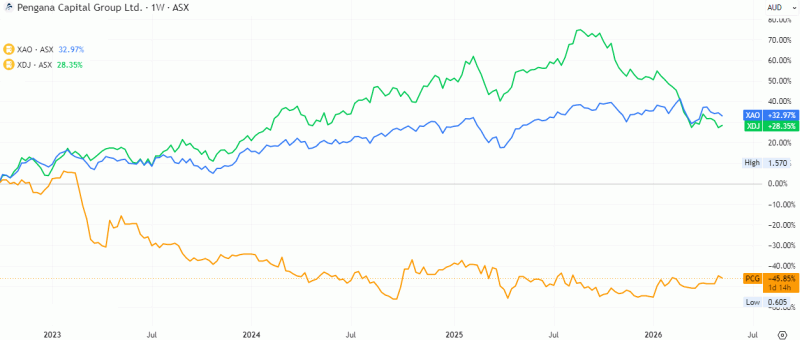
Stock Performance Profile
Source: TradingView
Financial Summary
Key Items | FY23 | FY24 | FY25 | FY26 |
|---|---|---|---|---|
Operating Income ($m) | NA | NA | 247.7 | 424.3 |
EBITDA ($m) | (25.0) | (24.3) | 5.8 | 107.6 |
Net Income ($m) | (14.7) | 74.8 | (62.2) | 7.4 |
Financial Strength
Key Items | FY23 | FY24 | FY25 | FY26 |
|---|---|---|---|---|
Current Ratio | 15.5x | 4.0x | 2.5x | 3.7x |
Debt/Equity | 27.0% | 42.1% | 27.5% | 17.3% |
EBITDA/Interest | NM | NM | 0.3x | 4.5x |
The company’s reported financial results shows a significant improvement in operating earnings and financial strength in FY26, although profitability remains relatively modest and somewhat volatile. Operating Income was not available for FY23–FY24, but increased strongly from $247.7 million in FY25 to $424.3 million in FY26, representing approximately 71% year-on-year growth and suggesting a substantial expansion in the company’s operating scale. EBITDA followed an even stronger trajectory, improving from a loss of $25.0 million in FY23 and $24.3 million in FY24 to a positive $5.8 million in FY25, before surging to $107.6 million in FY26. The FY26 EBITDA margin of roughly 25.4% of Operating Income indicates a meaningful improvement in operating efficiency, cost absorption and underlying earnings generation.
Net Income, however, remained volatile: after turning positive at $74.8 million in FY24, the company recorded a $62.2 million loss in FY25, before returning to a modest $7.4 million profit in FY26. This recovery is encouraging, but the substantial gap between EBITDA and net income suggests that depreciation, financing costs, tax effects, impairments or other below-operating-line items continue to affect bottom-line profitability. From a balance-sheet perspective, the Current Ratio improved from 2.5x in FY25 to 3.7x in FY26, suggesting a strong short-term liquidity position and a comfortable ability to meet current obligations. Although this remains below the exceptionally high 15.5x recorded in FY23, the FY26 level is still indicative of sound liquidity. Leverage has also improved considerably, with Debt/Equity declining from 42.1% in FY24 and 27.5% in FY25 to 17.3% in FY26, suggesting reduced reliance on debt financing and a stronger capital structure. Most importantly, EBITDA/Interest coverage improved from just 0.3x in FY25 to 4.5x in FY26, reflecting a major strengthening in the company’s capacity to service interest obligations from operating earnings. Overall, FY26 represents a material turnaround in operating performance, characterised by strong revenue/operating-income growth, a sharp expansion in EBITDA, improved liquidity, lower leverage and substantially stronger interest coverage. The key area requiring attention is the sustainability of net profitability, as FY26’s relatively low $7.4 million net income compared with $107.6 million EBITDA indicates that further improvement in non-operating costs and conversion of operating earnings into bottom-line cash generation will be important.
Industry Overview
According to the World Nuclear Association, despite holding around 28% of the world's identified uranium deposits, Australia accounted for only 7.6% of global uranium production in 2024, making it the fourthlargest producer. Australia's reserves include the world's largest uranium orebody, located at Olympic Dam in South Australia. The site primarily produces copper, with gold and uranium harvested as byproducts. Currently, the mine, operated by BHP, can produce 4,600 tonnes of uranium, dwarfing that of Four Mile, operated by Heathgate and Honeymoon, the recently restarted mine owned and operated by Boss Energy. Although domestic production is below 2020-21 levels, a surging world price of uranium has provided uranium miners with much-needed growth, elevating revenue at an annualised 16.2% over the five years through the end of 2025-26, including a 31.1% spike in the current year to reach $1.6 billion.
Source: IBISWorld
Risk Analysis
Paladin Energy faces the typical risks associated with uranium mining and large-scale project development, with its risk profile still strongly linked to the successful operation of the Langer Heinrich Mine (LHM) in Namibia and the future development of the Patterson Lake South (PLS) project in Canada. Although LHM completed its operational ramp-up strongly in FY2026, producing 4.82Mlb of U?O? at a cost of $43.3/lb, production remains exposed to ore grades, plant availability, recovery rates, water supply, mining conditions and cost inflation. The company is also exposed to uranium-price volatility, foreign-exchange movements, geopolitical and regulatory risks in Namibia and Canada, and potential delays or cost overruns in advancing PLS. PLS represents a major future growth opportunity but requires substantial capital, permitting and construction execution, creating development and financing risks before it can contribute production. In addition, uranium sales are influenced by long-term contracting arrangements and market conditions, while competition for skilled labour, supply-chain constraints and changes in nuclear-energy policy could affect project economics. Paladin's cash and investments of US$265m at June 2026 provide a meaningful liquidity buffer, but continued disciplined capital allocation remains important as the company moves from LHM ramp-up toward its next phase of growth.
Outlook
Paladin Energy's outlook is positive, underpinned by the successful completion of the LHM ramp-up, improving operating performance and a favourable long-term outlook for nuclear power and uranium demand. With LHM transitioning into full mining and processing operations, the company should benefit from greater production consistency, operating leverage and stronger cash generation if uranium prices remain supportive. The next major catalyst is the advancement of the Tier-1, high-grade PLS project in Saskatchewan, where regulatory progress and exploration success could materially enhance Paladin's longterm production profile and resource value. The company's strengthened operating base, substantial liquidity and exposure to a strategically important nuclear-fuel commodity position it well for further growth; however, the investment case remains sensitive to uranium prices, project execution and permitting outcomes. Overall, Paladin appears well positioned for mediumto long-term growth, with LHM offering the near-term production and cash-flow foundation and PLS offering potentially transformational future growth.
Historical Forecast and Assumptions
For FY27, Paladin Energy Ltd. to benefit materially from the completed ramp-up of the Langer Heinrich Mine, with uranium production of around 5.35 million lb U?O? and sales of approximately 5.05 million lb. Assuming a uranium spot price of around US$100/lb, consistent with Paladin’s FY27 contract-price sensitivity, the implied average realised price would be about US$83/lb; at an exchange rate of roughly US$1 = A$1.39, this supports estimated revenue of approximately A$582 million. With production costs averaging about US$46/lb, operating production costs of roughly A$343 million may occur, leaving scope for EBITDA of around A$210–230 million and net profit of approximately A$105–125 million, subject to depreciation, royalties, financing and tax effects. FY27 capital expenditure was expected to remain manageable at about A$40–49 million, based on Paladin’s US$29–35 million guidance. Overall, a substantial improvement in profitability and cash generation as Langer Heinrich operates at full production, although realised earnings will remain highly sensitive to uranium prices, production performance and foreign-exchange movements.
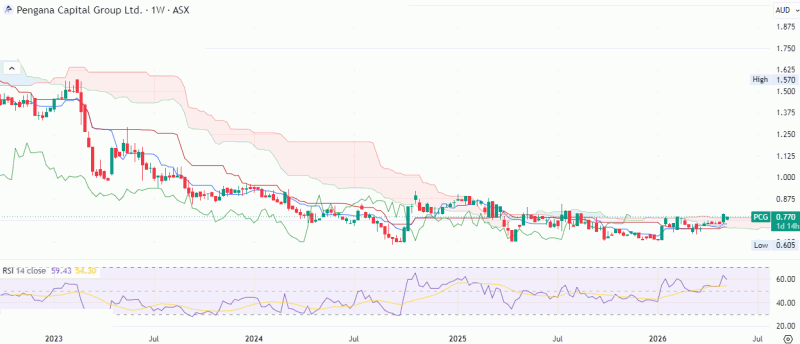
Technical Analysis
Source: TradingView
Historical Investment Assessment
Paladin Energy’s fundamentals are strengthening as the Langer Heinrich Mine moves into full-scale production, creating a more reliable foundation for revenue, cash flow and profitability. The company also retains significant long-term growth potential through the high-grade PLS project in Saskatchewan. A supportive uranium price environment could further enhance earnings and cash generation, while manageable capital expenditure should support financial flexibility. However, the investment case remains exposed to uranium price volatility, operational execution, permitting and foreign-exchange movements. Overall, Paladin combines an established production base with substantial future resource potential, supporting a constructive mediumto long-term fundamental outlook. Technically, the stock remains firmly entrenched in a primary uptrend, with intermittent profit booking offering attractive accumulation opportunities within the broader bullish structure. Currently, price action is forming a well-defined bullish flag pattern, a classic continuation setup that indicates potential for further upside in the coming weeks. The stock still maintain a sequence of higher highs and higher lows, reinforcing underlying trend strength. Following a healthy corrective phase, prices are stabilizing near a key support zone, suggesting renewed buying interest. Furthermore, RSI, MACD, and Parabolic SAR remain positively configured, collectively confirming strengthening momentum and supporting the probability of sustained upside over the short-to-medium term. the original research recommended a “BUY” at the closing price of $9.50 (as of 16th September 2026) and with stop loss of $6.65 and target will be $15.75 in couple of months from now.
This page adapts a historical research document and retains the original report date, company data and contemporaneous views. Market prices, financial information, forecasts, targets, stop-loss levels and recommendations may be outdated and have not been independently verified or updated by Sharesrise. References to research opinions are descriptions of the historical source, not newly issued Sharesrise recommendations.
This material is general information only and does not take account of any individual’s financial objectives, situation or needs. Securities, particularly smaller-capitalisation companies, involve substantial risk, including loss of capital. Past performance is not a reliable indicator of future performance. Seek appropriate professional advice and review current ASX announcements before making decisions. Sharesrise must obtain legal/compliance approval of this disclosure and the report rights before public release; this text does not assert an AFSL, CAR or other authorisation.